
1908~1960
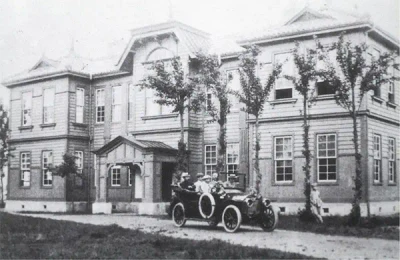
9月 The merger of eight celluloid companies leads to the establishment of Dainippon Celluloid Co., Ltd.
Although the celluloid industry boomed during World War I, the postwar depression left the industry battered from excessive competition arising from plummeting global demand for celluloid. With the realization that the Japanese celluloid industry could grow only through collaboration, eight celluloid companies decided to merge. The industry's reorganization thus led to the birth of our pioneering company (with 48% of the capital being provided by Sakai Celluloid, 21% by Japan Celluloid Artificial, 16% by Osaka Sen'i Kogyo, 7% by Tokyo Celluloid, and 8% by four other companies: Mikuni Celluloid, Notoya Celluloid, Toyo Celluloid, and Togawa Celluloid).
9月Acetate plastic called "Acetyloid" is developed.
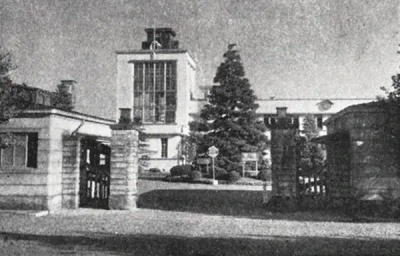
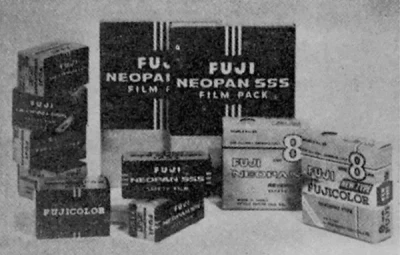
1月The Company's photographic film operations are spun off to form Fuji Photo Film Co., Ltd. (currently FUJIFILM Holdings Corporation)
From its very founding, the Company planned to enter the photographic film business as a new venture intended to complement the existing celluloid business.
In 1928, the Company established a photographic film testing plant (film lab) in its Tokyo Plant. There, research was conducted on film, photosensitive agents, and coating technologies. A plant was constructed in Ashigara, Kanagawa Prefecture, after this was determined to be the ideal location for film production.
In order to ensure that photographic film would eventually become a major product, Fuji Photo Film Co., Ltd. (currently, FUJIFILM Holdings Corporation) was established in 1934 as a comprehensive photography industry company. This company was established with the goal of dominating this business in the conviction that adopting manufacturing and sales initiatives different from those of the celluloid industry was essential.
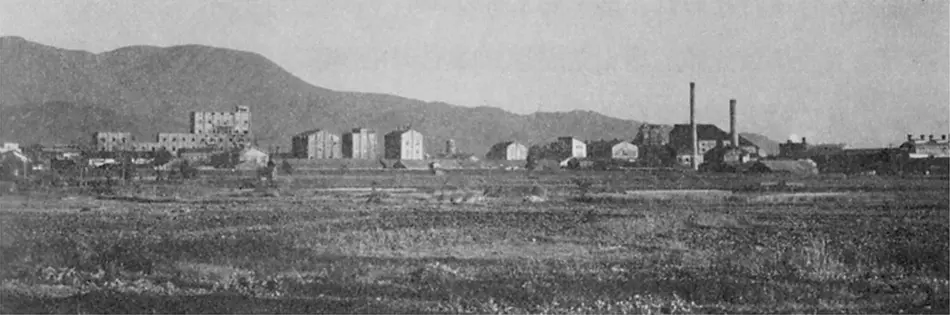
9月The Arai Plant is established in Niigata Prefecture to begin production of acetylene-base organic chemicals.
In 1933, we decided to enter the cellulose acetate business. We adopted the major policy of becoming self-sufficient in production of the raw materials of acetic acid and other products through integrated production from carbide and to develop related chemicals. This represents the origins of our current organic chemicals business. We determined that the Arai district of Niigata Prefecture provided a combination of cheap and abundant electricity, a reliable and plentiful supply of industrial water, and an adequate supply of high-quality limestone ore in nearby mountains. In 1935, we constructed our Arai Plant and began manufacturing carbide, acetylene, aldehyde, acetic acid, acetic anhydride, cellulose acetate, ethyl acetate, and acetone. Regarding acetic anhydride, a critical material for production of cellulose acetate, we adopted the ketene method, which results in high-purity products. This led to our current position as the trailblazer in the production of ketene derivatives and other fine chemicals.
1月The Kawachi Sub-Plant in the Aboshi Kako Plant (currently the Harima Plant) opens and begins production of smokeless gunpowder.
During World War I, prior to the merger that formed our Company, Japan Celluloid Artificial Silk Co., Ltd. first began manufacture of propellant at the Aboshi Plant. Later, during the Pacific War, manufacturing continued on the orders of the Japanese Army and Navy. After the war, we switched to supplying the private-sector to revitalize the market. In 1950, special demand for ammunition arose due to the outbreak of the Korean War, and we resumed our gunpowder business. In 1953, we established the Aboshi Kako Plant on coastal land adjacent to the Aboshi Plant. The next year, however, in view of the special nature of explosive production and storage, we sought a new location. As a result, we established the Kawachi Sub-Plant in the Aboshi Kako Plant (currently the Harima Plant).
8月The Sakai Plant begins production of acetate tow for cigarette filters.
As attempts were made to filter tobacco smoke in order to remove harmful substances, acetate filters have the advantage of absorbing nicotine tar without impairing the flavor of tobacco. This product was first put to practical use in the United States in 1951. In 1956, in collaboration with Nippon Monopoly Corporation (currently Japan Tobacco Inc.), we undertook research and development of filter tow, succeeding in domestic mass production of acetate tow in 1958.
1961~1999
1月 Dainippon Kasei Co., Ltd. (currently the Ohtake Plant) is established.
In July 1955, Japan's Ministry of International Trade and Industry announced development measures for the petrochemical industry. In response to the rise of the petrochemical industry, the Company launched petrochemical operations. In 1961, we established Dainippon Kasei Co., Ltd. (currently the Ohtake Plant) and initiated production of acetic acid, butanol, methoxybutanol, and acetate esters, later expanding our product line further. At the time the plant was established, all our employees banded together to overcome early struggles under the slogan "All in the same boat." Their legendary efforts to construct the plant became known as "The Ohtake Story."
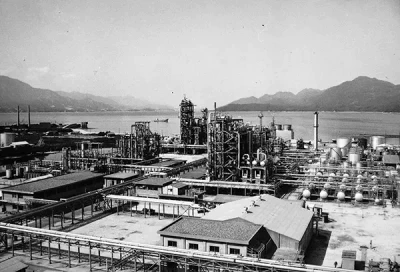
5月Polyplastics Corporation is established as a joint venture with Celanese Corporation and production of DURACON®polyacetal resin begins.
In 1960, Celanese Corporation developed a polyacetal resin using a proprietary copolymerization method and announced its commercialization. In 1961, we considered creating a joint venture for the production of polyacetal resin, and in 1964 we established Polyplastics Co., Ltd. as this joint venture. This polyacetal resin was given the trade name of DURACON® to represent its qualities as a "durable hard resin."
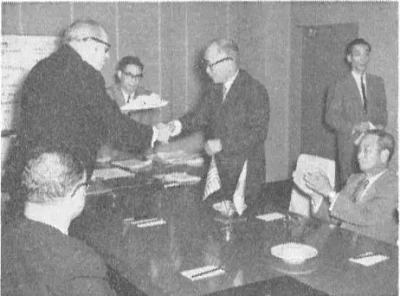
8月The Ohtake Plant begins commercialization of peracetic acid synthetic glycerin.
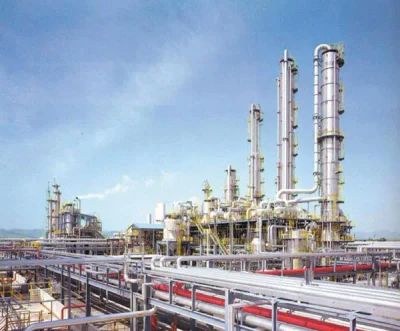
4月Production of acetic acid with the methanol carbonylation process begins.
Acetic acid production is the cornerstone of our cellulose and organic chemicals businesses. Commercialization of acetic acid made with the methanol carbonylation process in response to the introduction of C1 chemistry became a national project following the oil crisis. It also helped to solve the critical issues of strengthened cost competitiveness and stability of supply; moreover, it represented an initiative with the promise of reversing the company's fortunes. At that time, we had introduced the production technology from the Monsanto Company (U.S.A.) utilizing the methanol carbonylation process, a state-of-the-art manufacturing method that resulted in the development of the industry's leading acetic acid plant within a relatively brief 22 months. At the time of its completion, the plant had an annual production capacity of 150,000 tons. Production capacity was gradually increased, however, to the point where the plant's capacity now exceeds 400,000 tons per year, thus creating the foundation underpinning Daicel's various products and businesses.
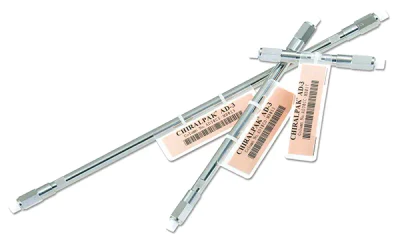
4月Optical isomer resolution business is launched.
Artificially synthesized chemicals have two molecules, D bodies and L bodies, which are related to optical isomers. These two molecules have the same chemical properties but, as pharmaceuticals, they have different physiological effects, so some may trigger undesirable side effects. After the impact of the troubling Thalidomide scandal over a 10-year span beginning in 1963, interest in resolution technology increased. At that time, Assistant Professor Yoshio Okamoto of the School of Engineering Science, Osaka University (currently a distinguished professor at Nagoya University) discovered that optically active polymethacrylate triphenylmethyl and the filler that carries it on silica gel have an excellent optical isomer resolution function. Daicel took advantage of this invention and succeeded in commercializing the development of chiral columns with an optical isomer resolution function. Today, this product is used by researchers the world over as an essential part of research and development, manufacturing, and quality assurance of chiral pharmaceuticals.
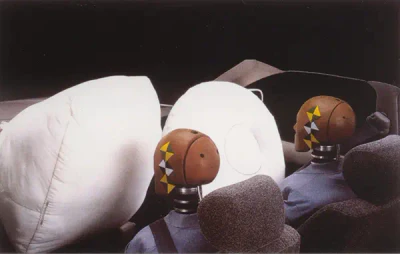
10月Daicel Safety Systems Inc. is established as a manufacturing subsidiary for automobile airbag inflators.
In 1967, Eaton, Yale, and Towne, Inc. (U.S.A.) introduced the airbag system as a lifesaving device in motor vehicle collisions. In 1969, the National Highway Traffic Safety Administration (NHTSA) under the U.S. Department of Transportation introduced a law mandating that all passenger vehicles be equipped with airbags. This sparked a full-scale research and development effort to achieve practical use of airbags. Our Company undertook the research and development of airbag systems beginning in the mid-1970s, and in 1988, we began supplying mass production equipment for inflators. From 2000 onwards, we began establishing production and sales bases in the U.S.A., Thailand, Poland, China and India, thus realizing our global supply system.
12月A joint venture is established with Shanghai Da-shen Cellulose Plastics Co., Ltd., a manufacturing and sales company of celluloid and acetate plastics.
2000~
10月The Company is renamed Daicel Corporation.
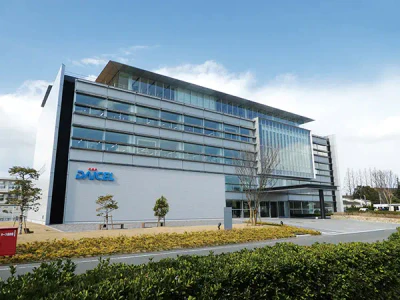
4月Our Central Research Center and Himeji Technology Head Office are consolidated at a new site, Innovation Park.
In the past, the "Central Research Center" consisted of the Corporate Research Center, which was responsible for creating new businesses and research on elemental technologies, and the R&D departments of each business company, which were responsible for developing new products and reducing costs in existing business areas. Both had independent offices. Likewise, in the Himeji Technology Head Office, independent offices were provided for the Production Engineering Head Office responsible for production innovation the Daicel Way and process innovation; the Responsible Care Office charged with promoting environmental protection and safety assurance of our Group; and the Engineering Center responsible for plant construction and maintenance. By consolidating and integrating the R&D, production technology, engineering, environmental and safety, and other technical departments into a single location, we are accelerating new business development, speeding up research on new products and innovative process technologies, and focusing on development of high-efficiency mass production facilities.
10月Made Polyplastics Co., Ltd. a wholly owned subsidiary of Daicel Corporation
Along with this transfer, Daicel-Evonik changes its name to Polyplastics-Evonik Corporation.
Daicel Pack Systems Ltd. is transferred to KOYO SANGYO CO., LTD.