About Daicel
Celluloid was the world's first industrialized plastic, and domestic production of the raw material fabric began in Japan in the 1900s. However, the subsequent increase in demand led to an upsurge in domestic celluloid manufacturers, resulting in excessive competition, declining quality, and overcutting of camphorwood, the raw material used to make celluloid. Concerned about this situation, eight celluloid manufacturers reorganized the industry, and in 1919, eight companies merged to create Dainippon Celluloid Co., Ltd., which is Daicel today. Daicel has continued to research and develop products that meet the needs of the times and offers a variety of products, including cellulose acetate and engineering plastics, which are today's mainstay products. In addition, the company has worked to innovate production technology in chemical plants, including DAICEL Production Innovation
Currently, we have 70 companies in 14 countries and regions around the world as of March 2026, with approximately 10,000 consolidated employees.
Just as the eight celluloid manufacturers of that time joined hands to enrich society, Daicel will contribute to the creation of a sustainable society together with our customers and partners, and change the future with the power of chemistry, keeping in mind our unchanging aspiration to be "the company making lives better by co-creating value."
-
-
Foundation year
1919
Celluloid manufacturers at the time
Eight companies merged
-
Number of Group Companies
70companies
in 14 countries/regions
(As of March 31, 2026)
-
Group Employees
11,034

-
Consolidated Net Sales
579.6bn
(FY 2026/3)

-
Consolidated Operating Income
42.1bn
(FY 2026/3)

Daicel Group’s Three Main Strengths
Development of Unique Technologies Since the Company’’s Foundation
-
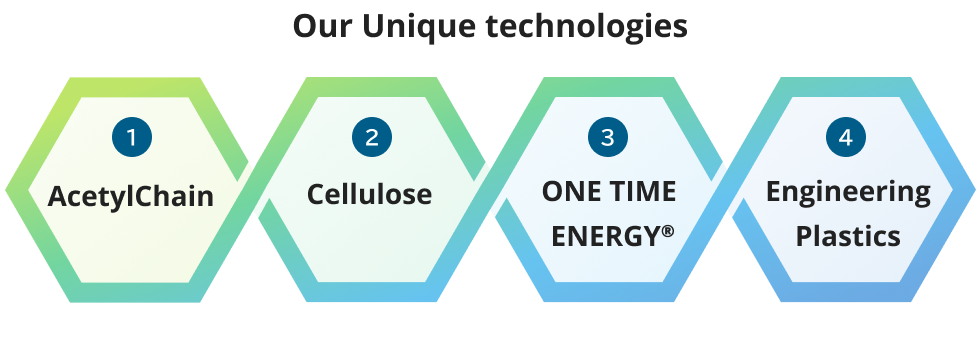
1
Acetyl Chain
Technology that built the acetyl chain
We are the only acetic acid manufacturer in Japan, and have built a series of characteristic acetyl chains that manufacture acetic acid derivatives such as acetyl chemicals and cellulose acetate from acetic acid. We are developing our business from a strong position globally.
-
2
Cellulose
Technology for controlling physical properties of cellulose, a natural material
Cellulose AcetateUtilizing the knowledge and technology related to cellulose that we have accumulated over many years since our founding, we are developing high-performance products centered on cellulose acetate, such as acetate fibers, filter materials, liquid crystal panel film materials, and cosmetic materials, in a wide range of fields.
-
3
ONE TIME ENERGY®
Expanding technologies accumulated over many years into new fields
ONE TIME ENERGY®Since the commercialization of automobile airbag inflators, we have continued to manufacture gas generators and have contributed to automobile safety. We define the technology cultivated in inflator manufacturing as ONE TIME ENERGY®, which generates optimal energy instantly, reliably, and safely," and we are working to apply this technology in a wide range of fields.
-
4
Engineering Plastics
Broad product lineup and technological solutions
Our strength lies in our wide-ranging product lineup, from general-purpose resins to super engineering plastics in addition to our engineering plastics, which have a large share of the global market. We also have technical solution centers around the world, and we provide technical solutions to our customers by making full use of the know-how and data we have cultivated.
Consolidated Net Sales and Operating Income
579.6bn
42.1bn
Segment
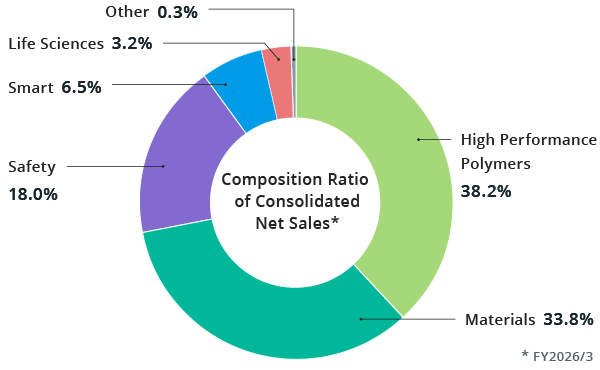
Daicel operates in five segments.
Daicel's History and Future
Ever since its founding in 1919, Daicel has a history of progress by meeting the needs of society as it changes over time and developing and providing products that contribute to sustainability.
Looking to the future, in FY2020 we formulated the 4th Long-Term Vision "DAICEL VISION 4.0" centered on our sustainable management policy, and from FY2025 we have launched the Mid-Term Management Strategy “Accelerate 2030” as a concrete growth strategy to realize this vision, accelerating the transformation of our business portfolio and the creation of new value. We continue to work on improving the corporate value of Daicel Group and contributing to building a circular society.
Development of Our Celluloid Business and Creation of a New Organic Chemicals Business
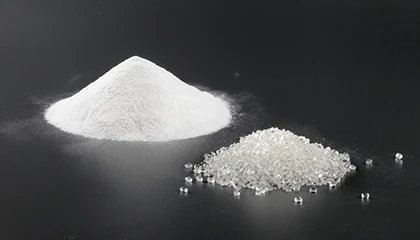
Daicel was founded in 1919 through the merger of eight celluloid companies. From the beginning Daicel worked to make celluloid less inflammable and ended up developing acetate plastic. After establishing the Arai Plant in 1935, we then in 1938, laid the foundations for our cellulose and organic chemicals businesses by setting up a system for consistent production of the raw material cellulose acetate from acetic acid.
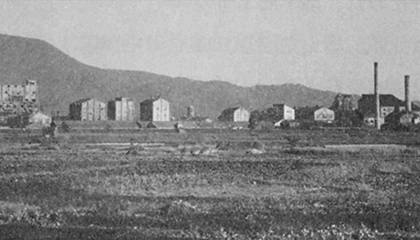
Enrichment of daily life Celluloid
As a pioneer in the field of plastics, we played an integral role in the development of the Japanese chemical industry.

Securing safety Cellulose acetate
- 1938
- Commercialized cellulose acetate, offering a solution to flammability concerns associated with cellulose nitrate.
Full-Scale Production in Our Cellulose Business and Starting Our Pyrotechnic Devices Business
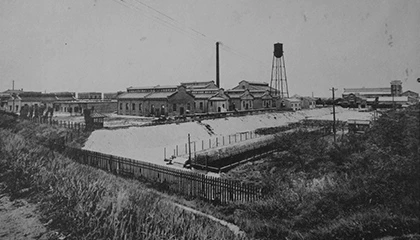
Production of acetate plastic went into full operation at our Aboshi Plant in 1950, and in 1953, joint research with Fuji Photo Film Co., Ltd.*led to the beginning of production of TAC, and in 1958 our Sakai Plant began production of acetate toe, which is used in cigarette filters, rounding out our cellulose business. Since cellulose nitrate is a raw material for pyrotechnics, our pyrotechnic business developed, and we established the Harima Plant in 1954.
-
* Now known as Fujifilm Corporation
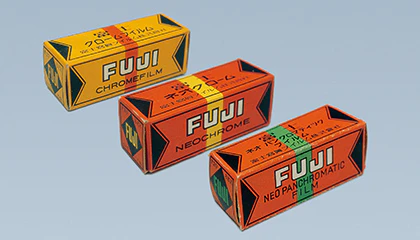
Fireproofing films for movies and photography and adding advanced properties Tri-Acetate Cellulose (TAC)
- 1953
- We began producing TAC and after 2000, this business grew significantly as the material came to be used for optical film.
Entry into the Petrochemical Business
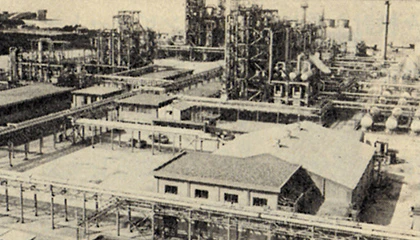
During the 1960s, Daicel participated in Japan’s first petrochemical complex and began its petrochemical business with the construction of the Ohtake Plant. In the synthetic resins business, in addition to manufacturing AS resin and ABS resin, Daicel entered into a joint venture with the U.S. company Polyplastics, Co. Ltd.*and went into the engineering plastics business.
-
* Polyplastics, Co. Ltd. became a wholly owned subsidiary of Daicel in FY2021/3.
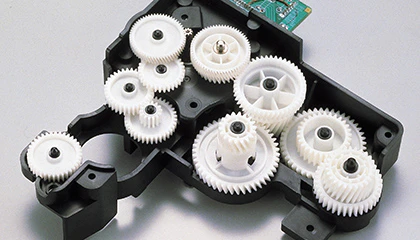
Taking on the challenge of Metal Replacement Polyacetal (POM)
- 1964
- Daicel began manufacturing engineering plastics, which serve as metal substitutes in automobiles and other products. Their use has contributed to the development of lightweight components and contributed to a reduction in the environmental load.
Strengthening the Foundations of Our Acetic Acid Business
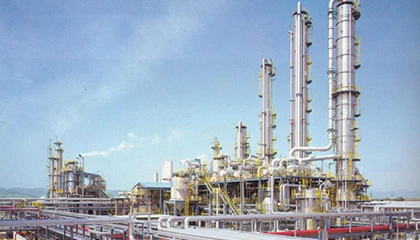
In order to deal with a structural slump and to strengthen our main businesses, we went into the methanol carbonylation business, which was the cutting-edge technology at the time, as part of an effort to switch to raw materials that do not depend on petroleum. Participating in the C1 Chemistry Project*, we played a role in reorganizing the acetic acid industry.
-
* C1 Chemistry was a national project which aimed to break away from over-reliance on oil during the 1970s energy crisis.
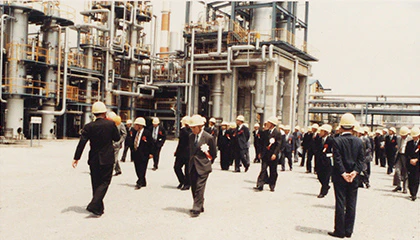
Realignment of the acetic acid sector Acetic acid using the methanol carbonylation process
- 1980
- Introduced the methanol carbonylation process to produce acetic acid, our core material, which led to the realignment of the acetic acid sector.
Proactive Expansion of Our Businesses Overseas
During the 1980s, we established local subsidiaries in Europe, the United States, and Asia. In 1988, we established a subsidiary for manufacturing inflators for automobile air bags. In 1990, we set up a manufacturing base for optical isomer separation in the United States, and in 1992, we began manufacturing acetate toe at a joint venture company in China.
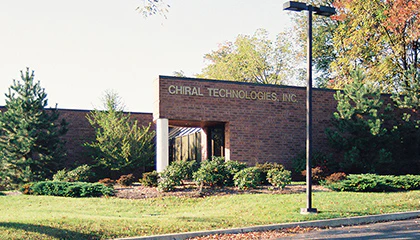
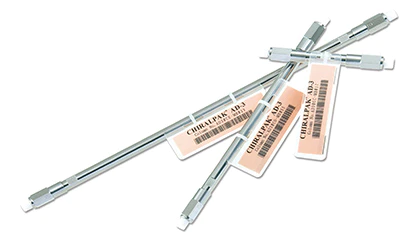
Provision of safe medicine Chiral columns
- 1982
- Started producing chiral columns, which are used to separate substances that may otherwise cause adverse side effects.
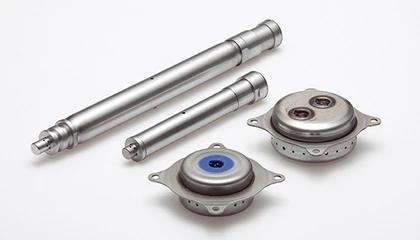
Provision of safety and security Automobile airbag inflators
- 1988
- Started supplying the key component for automobile airbag systems that protect passengers in the event of a collision.
Expansion of the Inflator and TAC Businesses and Lateral Development of Daicel Production Innovation
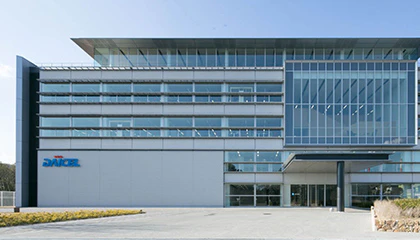
We have expanded our inflator business and established bases for that purpose in six countries around the world. We have also expanded our display business by taking TAC, originally a raw material for movie and other films, and using it for manufacturing optical film. In the area of technology, we rolled out the Daicel Production Innovation system established at the Aboshi Plant across the company and accelerated process innovations. In 2017, we opened Innovation Park as a center for research and development and concentration of production technology.
Improving Productivity Daicel Production Innovation
- 2000
- By establishing DAICEL Production Innovation at Aboshi Plant and rolling it out to other locations, we significantly improved production efficiency.
Autonomous Production System Developments
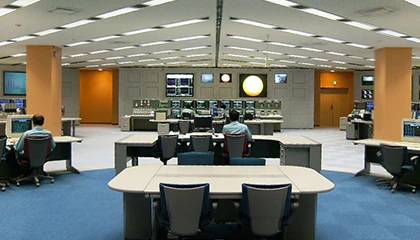
Against the backdrop of digital transformation (DX), in 2020, Daicel used its proprietary AI technology to advance “DAICEL Production Innovation”—the foundational philosophy of manufacturing—and developed the Autonomous Production System.This system integrates and processes more than 8.4 million pieces of know-how extracted from the expertise of skilled operators, along with production operation data and real-time data accumulated over approximately 20 years, and the fundamental principles of chemical engineering. Through this, the company pursues an optimal balance of safety, quality, cost, and delivery time, driving the advancement of its production infrastructure.
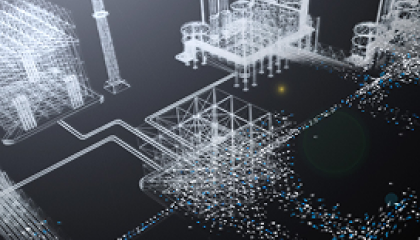
Contributing to the shift of people toward creative work Autonomous Production System
- 2020
- We developed Autonomous Production System and began implementation at Aboshi Plant. Through production optimization in chemical plants, we are contributing to creating an environment where operators can focus on creative work that only humans can do.
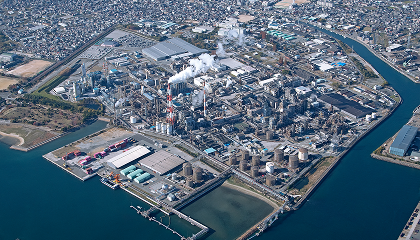
Proactive expansion of growth businesses and strengthening of new businesses
With the aim of creating further synergies, we integrated Polyplastics—which we made a wholly owned subsidiary in 2020—into Daicel in 2026, thereby unifying our operations. We are working to enhance corporate value by further strengthening Engineering Plastics, which drives our growth.
In addition, as part of our efforts to apply the technology we have developed through our inflator business to medical applications, we established Daicel Medical Ltd. in 2023. In 2025, we obtained approval in Japan for the manufacture and sale of the Daicel injector as a medical device, and we are now fully expanding our business in the medical field.
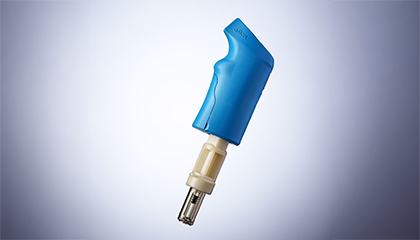
Contribution to safety in medical care and innovation Daicel injector P1 SC
- 2025
- Obtained approval in Japan for the manufacture and sale of the “Daicel Injector P1 SC,” a gas-powered, needle-free injector for pharmaceuticals and vaccines