Working Toward Value Co-Creation
In order to contribute to building a circular society as set forth in our Long-Term Vision, we will provide new products and services, transcending the boundaries of departments, companies, industries, academia and government, while sharing common aspirations. We are pleased to have signed comprehensive collaboration agreements on joint research with Kanazawa University, Kyoto University, Kobe University, Kumamoto University, and the University of Hyogo. Moreover, as part of our commitment to forming collaborative ties between industry and academia encompassing universities and public research institutes, we are establishing collaboration centers at universities located both inside Japan and abroad. At the same time, we are moving forward with the development of innovative products that contribute to the emergence of a recycling-oriented society as well as the resolution of societal issues. In this effort, we remain committed to societal development together with partners capable of creating value, starting with our collaborations between industry and academia.
Examples of Co-Creation
Co-creation contributing to the emergence of a society committed to sustainability (Collaborations with Kanazawa University and Kyoto University)
Under the Long-Term Vision “DAICEL VISION 4.0” and the Sustainable Management Policy, we are developing and expanding our technology to produce valuable products that increase human happiness in a manner friendly to both people and the planet. We aim to contribute to the emergence of a society that cycles materials. As part of this initiative, we have been pursuing the effective use of natural resources — including cellulose, a product we have been developing for many years — to accelerate the transition away from a reliance on petroleum products through the Biomass Product Trees Concept. In addition, we have been implementing the Biomass Value Chain Concept, a framework designed to generate new social value through collaborations with a wide range of industrial sectors.
-
1.Kanazawa University
As we proceed with our collaborations involving joint research and personnel exchanges focused on cellulose, we signed a comprehensive cooperation agreement in July 2018; moreover, in July 2019, we established the Leading Science and Technology Joint Research Program and its associated laboratory to focus on basic research on new functional materials derived from biomass. As well, in April 2023 we established the Biomass Green Innovation Center (BGIC) to serve as a new hub of research on biomass product trees. BGIC is engaged in joint research on technologies intended to contribute to the emergence of a truly sustainable society. Specifically, it is engaged in joint research to convert the products of various primary industries as well as their by-products, waste, and CO2 emissions into valuable materials through environment-friendly next-generation chemical conversion processes while also promoting their adoption by society.- New base for biomass product trees research established at Kanazawa University (December 8, 2020) (Only in Japanese)[PDF:142KB]
- Biomass Green Innovation Center begins full-scale operation (April 28, 2023)(Only in Japanese)
- Click here to watch the video introducing the joint research(Only in Japanese)
-
2.Kyoto University
With the aim of achieving waste-free utilization of wood resources, we are developing methods for solubilizing wood under mild conditions, separating the components of wood, obtaining functional products through chemical modification, and making functional materials. Joint research began in 2017, and in October 2021, Daicel and Kyoto University signed a comprehensive collaboration agreement with the intention of contributing to the emergence of a low-carbon society in harmony with nature while developing new industries. On the Uji Campus of Kyoto University, we established the Biomass Product Tree Industry-Academia Collaborative Research Laboratory as a joint facility comprising three research institutes of Kyoto University and Daicel to promote strong joint research between industry and academia.
Engaging in Collaborative Innovation across a Range of Fields Including Medical and Healthcare, Chemistry and Bioprocesses, and Green Chemistry (Kobe University)
On June 23, 2022, we concluded an agreement with Kobe University to promote comprehensive collaboration between industry and academia with the aim of pursuing research, developing technologies, and contributing to society. We are conducting joint research in four fields: medical and healthcare, chemistry/bioprocesses, green chemistry and the humanities and social sciences. In addition, under the terms of a project by the Ministry of Economy, Trade and Industry incorporated in the “Fiscal 2022 Supplementary Budget: Development of Incubation and Industry-Academia Fusion Bases at Regional Core Universities” as adopted by Kobe University, we have established incubation facilities for training and exchanging researchers, students, and personnel to support entrepreneurship. This is intended to support the formation of startups along with facilities and equipment for use in joint research with companies related to biomedical membranes. We also supported the establishment of the Biomedical Membrane Research and Open Innovation Center (commonly known as the J-Innovation HUB Building), a core center for fusion between industry and academia that includes comprehensive facilities to promote open innovation. As we utilize these facilities to strengthen collaboration among industry, academia, and government, we will continue to expand our joint research and technology exchanges with Kobe University and contribute to the emergence of a sustainable society committed to recycling by implementing our innovations within society.
- Supporting the development of Kobe University's incubation and industry-academia fusion hub (Only in Japanese)
- Kobe University and Daicel Sign Comprehensive Collaboration Agreement - Creating innovation through results in the medical and healthcare fields and beyond - [PDF: 345KB]
ONE TIME ENERGY®」 Technology — An invaluable asset for co-creating original value across the four business segments targeted by Daicel (Kumamoto University)
In October 2022, we established the One Time Energy Joint Research Program to focus on the co-creation of original value through collaboration between industry and academia. In this program, we are addressing themes for joint research that integrate the results of impact energy research undertaken by Kumamoto University with Daicel’s ONE TIME ENERGY® technology. In May 2023, we signed an agreement on comprehensive collaboration to further strengthen our partnership with the goal of enhancing our collaboration in areas such as healthcare, safety and security, convenience and comfort, and the environment. This initiative contributes to joint research leading to societal implementation, personnel development, and regional cooperation in a manner that benefits both parties as well as the local community.
- Comprehensive Collaboration Agreement Signed with Kumamoto University (National University Corporation) - Further Strengthening Collaboration to Co-create New Value Never Before Seen in the World - (May 8, 2023) [PDF: 159KB] (Only in Japanese)
- Establishment of the "One-Time Energy Joint Research Course" with Kumamoto University - Co-creation of new value that does not yet exist in the world - (October 20, 2022) [PDF: 294KB] (only in Japanese)
Co-creation aimed at clarifying friction interface phenomena and developing new materials (University of Hyogo)
In August 2017, we entered into a comprehensive partnership agreement intended to promote collaboration between industry and academia across many fields of endeavor. In 2020, we established the Joint Research Program on Friction Interface Phenomena to study these complex friction interface phenomena from both a micro (atomic and molecular scale) and macro (practical material scale) perspective. Additionally, we aim to construct theories related to the essence of these materials in order to obtain the desired characteristics required when using resins as friction components. We aim to embody the theories and elemental technologies obtained from this joint research program in order to provide lightweight, high-performance, and innovative materials that meet societal needs.
- "Joint Research Program on Friction Interface Phenomena" established at University of Hyogo. Opening ceremony held on Tuesday, November 24, 2020 (November 17, 2020) (Only in Japanese)
- Comprehensive Collaboration Agreement Signed with University of Hyogo (August 25, 2017) (Only in Japanese)
In order to devise solutions to social issues, we are focused on co-creation with various companies and research institutes. Please feel free to contact us.
In Focus
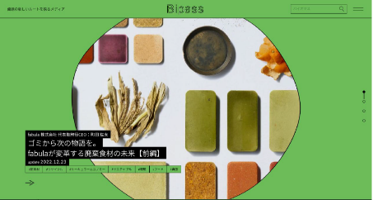
資源の新しいルートを探るWebメディア「Bipass」
「Bipass」は、ダイセルのコア技術である「バイオマス」に関するテーマにおいて、当社だけではない、あらゆる企業・団体などの取り組みを紹介しています。未来へ向けた問題提起、議論の場として機能することで、バイオマスの社会的認知の拡大、仲間集めを行います。